
Pancreatic Enzyme Replacement Therapy (PERT) in Chronic Pancreatitis
(Patient-Friendly Guide)
What is Chronic Pancreatitis?
Chronic pancreatitis is a long-standing inflammation of the pancreas. Over time, the pancreas gradually loses its ability to produce enough digestive enzymes. These enzymes are essential to digest fats, proteins, and carbohydrates.
When enzyme production becomes insufficient, it leads to Exocrine Pancreatic Insufficiency (EPI) — meaning your body cannot properly digest food.
Why Are Pancreatic Enzymes Needed?
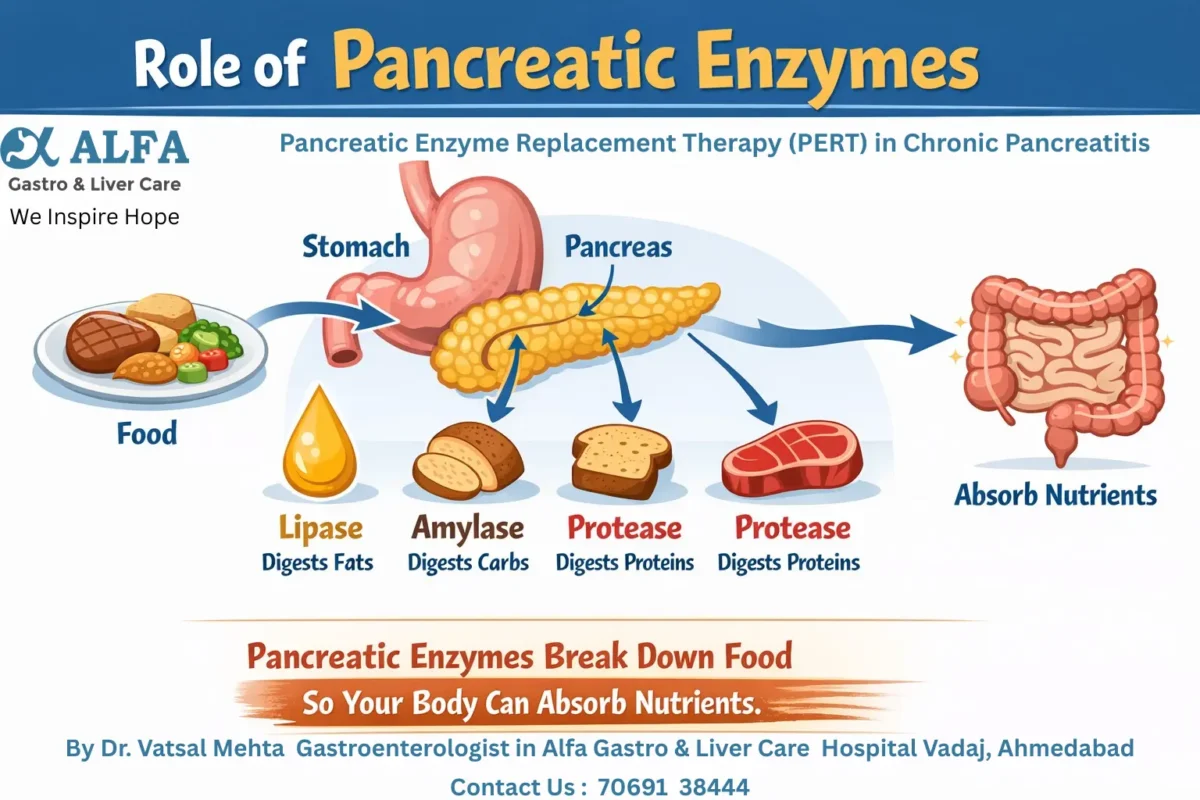
The pancreas normally releases enzymes such as:
Lipase – digests fat
Amylase – digests carbohydrates
Protease – digests protein
In chronic pancreatitis, enzyme production drops significantly. As a result:
Food is not properly digested
Nutrients are not absorbed
Weight loss occurs
Stools become oily, bulky, and foul-smelling (steatorrhea)
Bloating and gas increase
Vitamin deficiencies (A, D, E, K) develop
Pancreatic Enzyme Replacement Therapy (PERT) replaces these missing enzymes so your body can digest food properly.
Indications for PERT
PERT is recommended in chronic pancreatitis when you have:
Oily, floating, foul-smelling stools
Weight loss despite eating adequately
Bloating and excessive gas
Fat-soluble vitamin deficiencies
Evidence of pancreatic insufficiency on testing
After pancreatic surgery
Why Is It Required Life-Long?
In chronic pancreatitis, the damage to the pancreas is usually permanent.
Unlike acute inflammation, the lost enzyme-producing cells do not regenerate. Therefore:
The pancreas cannot recover its full digestive capacity
Enzyme production remains low permanently
Without enzymes, malnutrition and vitamin deficiencies continue
That is why most patients need pancreatic enzymes for life.
Stopping enzymes often results in recurrence of symptoms such as steatorrhea, weight loss, and weakness.
How Should You Take Pancreatic Enzymes?
Common brands contain enteric-coated capsules with enzyme beads.
Correct Method of Taking PERT:
✔ Take enzymes with every main meal and snacks containing fat or protein
✔ Take them during the meal, not before or after finishing
✔ Swallow capsules whole (do not crush or chew)
✔ If unable to swallow, capsules can be opened and mixed with soft acidic food (like curd or fruit puree) and swallowed immediately
✔ Do not mix with hot food
Dose
The dose depends on:
Severity of pancreatic insufficiency
Fat content of the meal
Body weight
Your doctor adjusts the dose based on symptoms and weight response.
Dietary Modifications in Chronic Pancreatitis
1. Do Not Stop Fat Completely
Older advice suggested strict low-fat diets.
Now we recommend:
Moderate fat intake
Take adequate enzymes with meals
Fat restriction is only needed if symptoms persist despite enzymes.
2.Eat Small, Frequent Meals
5–6 small meals daily
Easier digestion
Better enzyme mixing
3.High-Protein Diet
Helps maintain weight and muscle mass.
Sources:
Dal
Paneer
Eggs
Fish
Chicken
Soy products
4.Avoid Alcohol Completely
Alcohol worsens pancreatic damage and pain.
5.Stop Smoking
Smoking accelerates pancreatic damage.
6.Vitamin Supplementation
You may need supplements for:
Vitamin A
Vitamin D
Vitamin E
Vitamin K
Calcium
Your doctor may check blood levels periodically.
When to Consult Your Doctor?
Continued weight loss
Persistent oily stools
Severe abdominal pain
New-onset diabetes
Swelling of legs or weakness